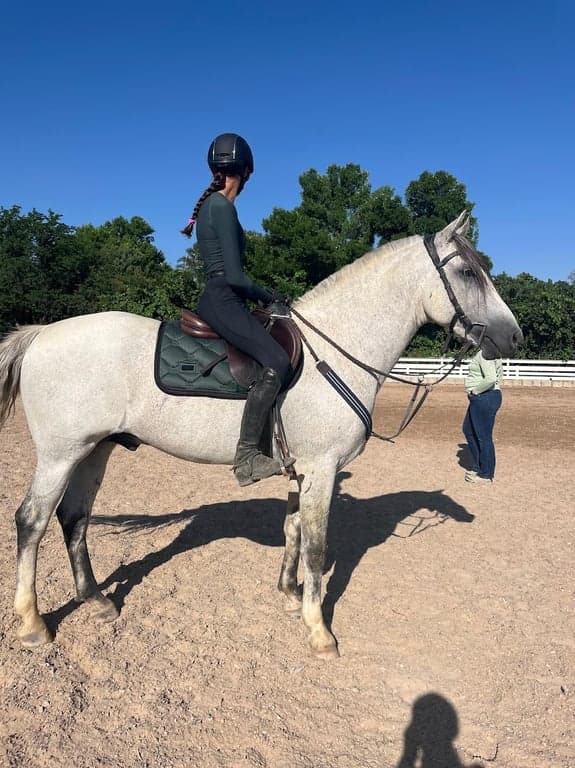
Marcha batida
ba-chee-da
The more diagonal expression of the marcha. USMMA describes it as similar to a broken trot, while the horse keeps the characteristic marching sequence.
The Mangalarga Marchador is a Brazilian saddle horse built around the marcha, a natural four-beat gait that alternates between lateral and diagonal support.
A Marchador does not fit neatly into the familiar walk, trot, and canter shorthand. The marcha has its own rhythm, and the balance of that rhythm can favor diagonal or lateral movement.
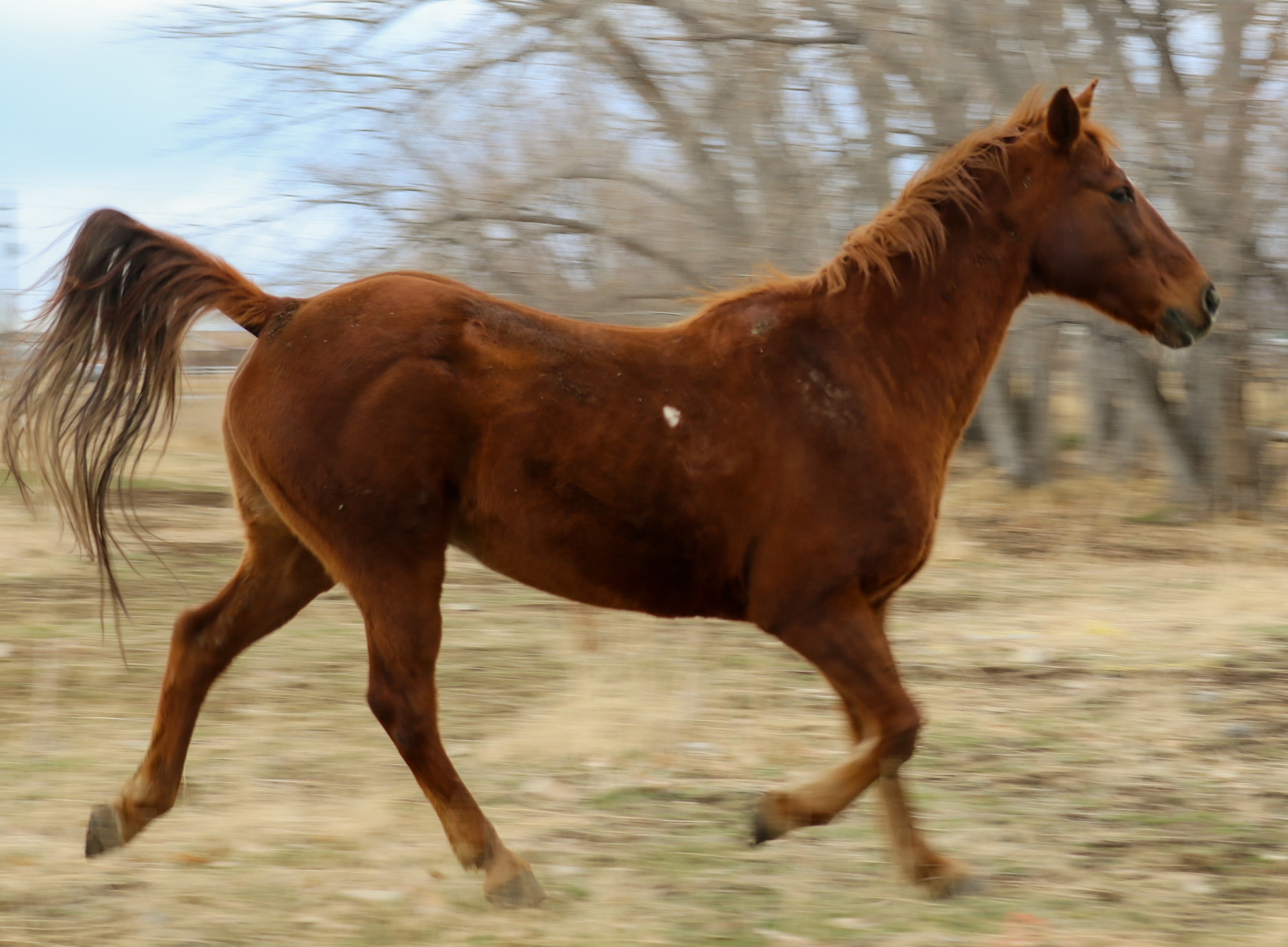 Button Ranch archive / Salem, Utah
At a glance
Both expressions use alternating lateral and diagonal footfalls with moments of three-hoof support. The difference is which tendency is more pronounced.
ba-chee-da
The more diagonal expression of the marcha. USMMA describes it as similar to a broken trot, while the horse keeps the characteristic marching sequence.
picada, like the sauce
The more lateral expression. Its footfalls are more separated in time, and USMMA notes that riders often consider it the smoother of the two.
At points in the marcha, three hooves support the horse at once. That continual ground contact is part of the gait's stable, low-friction feel for the rider.
18th century / Brazil
USMMA traces the breed's development to 1740 and the horses of Hacienda Campo Alegre in Brazil. The foundation brought together local mares with the influence of an Alter Real stallion named Sublime.
The breeding goal favored a useful saddle horse with a smooth, cadenced marcha. That gait became so central to the horse that it became part of the breed's name.
Marchador names also preserve breeding history. A compound registered name commonly includes the breeding farm, much like a surname, so the name itself can point back to the horse's origin.
Keep the record straight
The marcha is not a trained trick or a label applied after the fact. It is the defining natural gait evaluated alongside conformation and temperament in the breed standard.
03 / Official North American organization
USMMA is the official association and registry for Mangalarga Marchadors in North America. It maintains breed records, publishes the North American breed standard, and works with Brazil's ABCCMM.
Visit the U.S. Mangalarga Marchador AssociationIts natural marcha replaces the ordinary trot as the intermediate gait. The footfalls alternate between lateral and diagonal support, with moments when three hooves are on the ground.
Marcha batida favors diagonal movement. Marcha picada favors lateral movement and separates the footfalls more distinctly. Both are expressions of the marcha.
USMMA maintains the North American registry. Registration and pedigree questions should be confirmed with the association and the horse's current documents.
Breed information gives context. The individual record carries the details that matter for a specific horse.
Susan is a beautiful marchador mare aged 5 years. This horse is papered.
Sources and further reading